
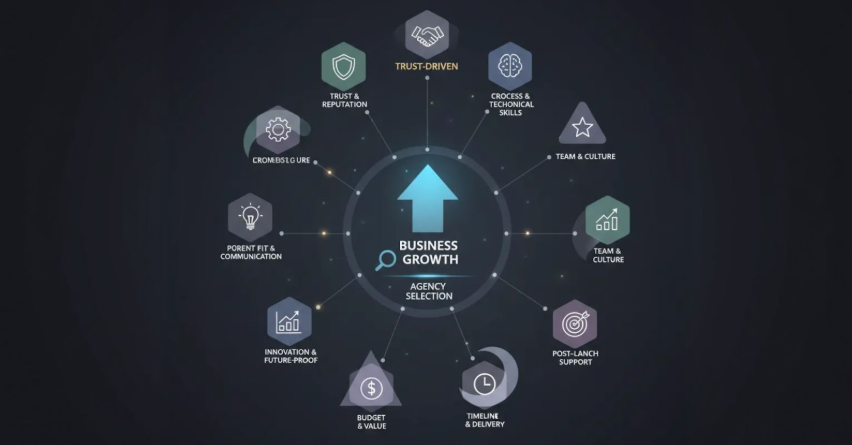
Your digital product is the face of your business. If the design is poor, users will leave. If the design is good, users will stay. It is that simple.
In a market full of noise, finding a partner to build your app or website is a high-stakes game. You need a team that thinks like you but has the skills you lack. You need experts who can turn a raw idea into a working system. But with thousands of firms out there, how do you pick the one that fits?
Choosing a design partner is not just about looking at pretty pictures. It is about finding a team that solves problems.
It is about trust. It is about money. And it is about speed. If you choose wrong, you waste months of time and huge chunks of your budget.
If you choose right, you gain an asset that helps your business grow for years.
This guide cuts through the noise.
We will look at ten clear steps to help you find, vet, and hire the best team for your project. We will focus on what matters: skills, process, and results.
1. Set clear aims, guide the design
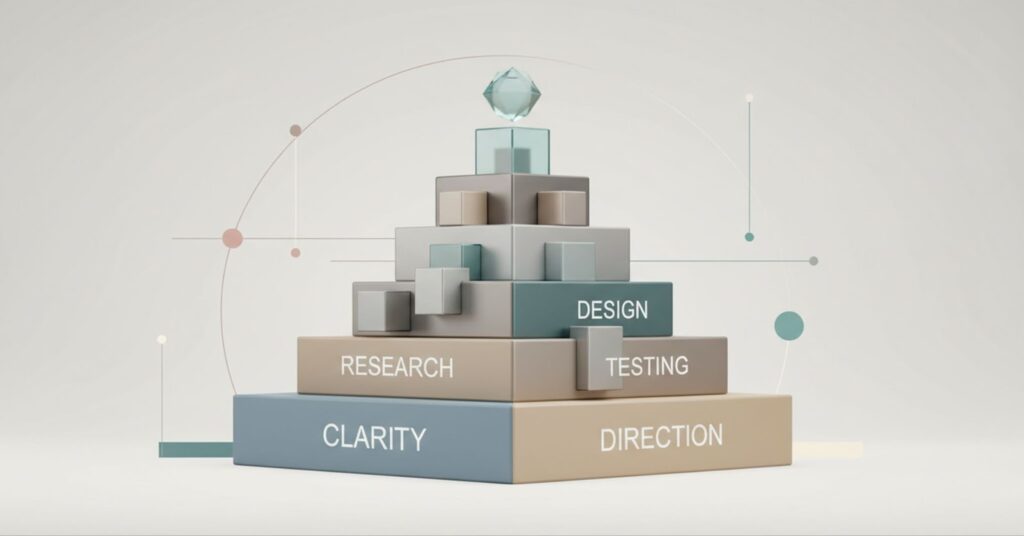
Setting clear aims will guide the design effectively from day one. Before you even send an email to an agency, you must look inward. You cannot ask for a map if you do not know where you are going.
Too many business owners hire a team without a clear scope. This leads to scope creep, lost money, and weak results.
Start by asking what you need. Are you building a new product from scratch? Are you fixing an old app that users hate?
Do you need a full rebrand or just a cleanup of your user flow? The more precise you are, the better the agency can help.
Write down your goals. Do not just say, “I want it to look good.” That is vague. Say, “I want to increase sign-ups by twenty percent.” Or, “I want to reduce the time it takes to check out.” These are clear aims. They give the design team a target to hit.
Also, think about your users. Who are they? What problems do they have? If you can explain your user to the agency, you are halfway there.
If you do not know your user, the agency will have to guess. And guessing is risky.
Be ready to share your business model. A design team needs to know how you make money. If they know your profit drivers, they can design flows that support them. Clear aims protect your budget and ensure the final output serves your real needs.
2. Check past work, see skills
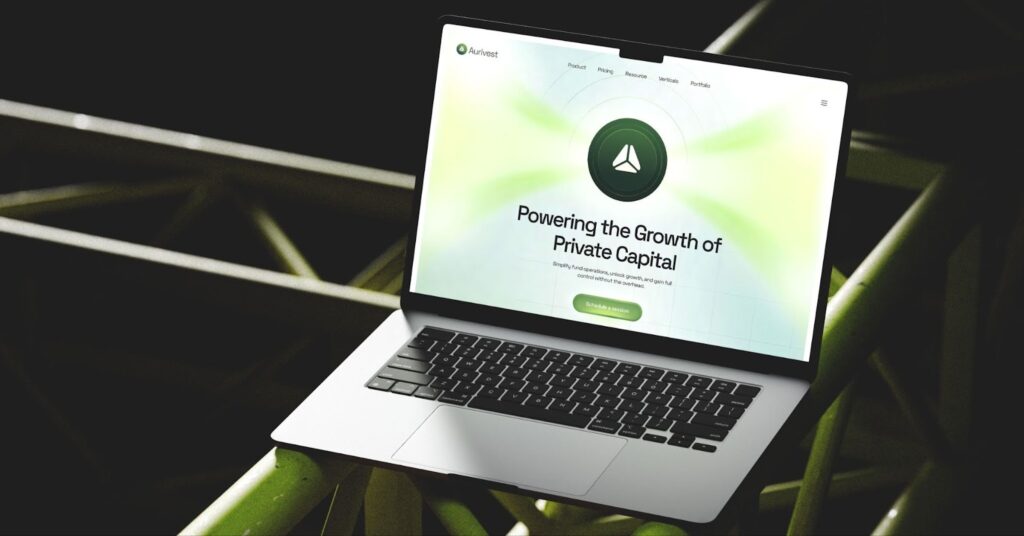
Checking past work allows you to see the skills they claim to have. A portfolio is the proof in the pudding. Every agency will tell you they are the best. But their past work tells the true story. Do not just glance at the thumbnails. Open the case studies. Read them deeply.
Look for problem-solving. Pretty screens are easy to make. Solving hard logic puzzles is hard. Does the case study explain the challenge? Does it show the process? Or is it just a gallery of nice images? You want a team that thinks, not just one that paints.
Check for relevant work. If you are building a fintech app, look for finance work. If you are in health care, look for health apps. Industry knowledge saves time. They will know the rules, the jargon, and the user needs of your specific field.
Also, look for range. If every project in their portfolio looks the same, that is a red flag. It means they have one style and force every client into it. You want a partner who can adapt. Your brand should look like you, not like them.
Ask for live links. Case studies can be mocked up to look perfect. A live app shows the real truth. Download it. Use it. Is it smooth? Does it break? The proof is in the live product.
3. Read client views, learn trust

Reading client views helps you learn to trust the agency before you sign. What a sales rep tells you is marketing. What a past client tells you is data. You need to know what it is like to work with this team when things get tough. Because things always get tough.
Go to third-party review sites. Clutch and Google are good places to start. Look for patterns in the feedback. Do clients say they are always late? Do they say the team is hard to reach? Or do they praise their ideas and speed?
Pay attention to how they handle feedback. Design is a two-way street. You will give feedback, and they must implement it. Look for reviews that mention “good listener” or “easy to work with.” You do not want a diva designer who fights you on every change.
If you can, ask to speak to a past client. A five-minute call can save you months of pain. Ask them: “Did they stay on budget?” “Did they hit the deadline?” “Would you hire them again?” The answers will tell you more than any pitch deck ever could.
Trust is the bedrock of this deal. You are handing over your vision and your money. You need to verify that they are worthy of that trust.
4. Know their tool use, see tech fit
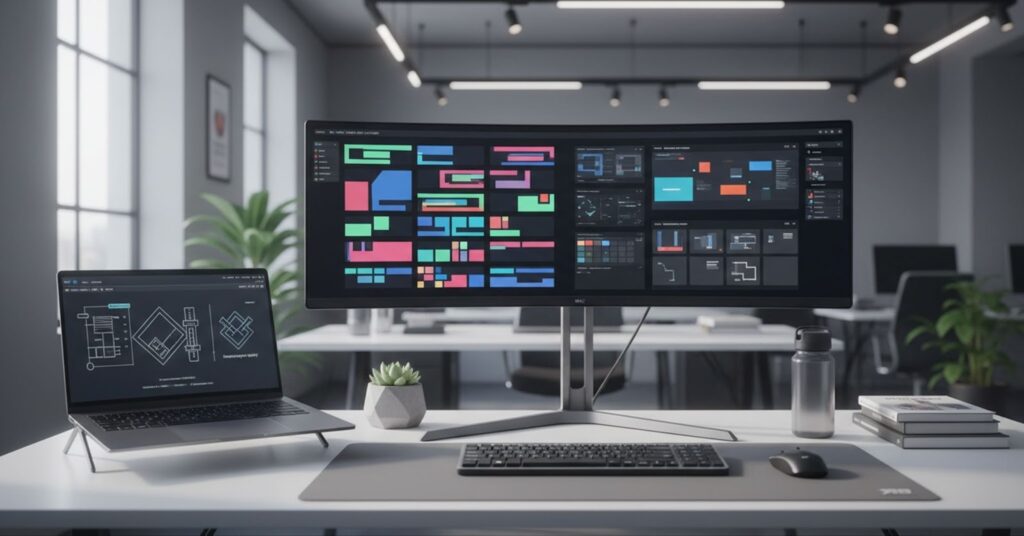
Knowing their tool use helps you see a tech fit for your team. Design tools change fast. A modern agency should use modern tools. This matters for speed, but also for the future of your product. If they deliver files in formats you cannot use, you have a problem.
Ask what they use for UI design. Figma is the standard right now. Sketch and Adobe XD are also common. If they are using Photoshop for web design, run away. That is a sign they are stuck in the past.
Ask about their hand-off process. How do they give the designs to the developers? Do they use Zeplin? Do they use the dev mode in Figma? A good agency thinks about the code. They design systems, not just pages. They use grids, type scales, and components that are easy to build.
If you have an in-house tech team, make sure the agency uses tools that fit your workflow. You do not want to spend weeks converting files. You want a seamless flow from design to code.
Also, ask about their design systems. Do they build a library of assets for you? A design system keeps your product consistent as it grows. It saves time on future updates. If they do not know what a design system is, they are not the right pick for a scaling business.
5. Ask about their team, find a match
Asking about their team helps you find a match for your culture.
You are hiring people, not a logo. You need to know who will actually do the work. Often, the senior partners pitch the deal, but junior staff do the work. You need to clarify this upfront.
Ask: “Who will be my main point of contact?” You want a project manager who speaks plain English, not just jargon. You want a lead designer who understands your vision.
Ask about their location. Are they in your time zone? If not, how will you talk? Remote work is fine, but you need overlap hours. If you have to stay up until midnight to have a meeting, the relationship will sour fast.
Culture fit is real. Some agencies are corporate and stiff. Some are loose and casual. Which one suits you? If you are a fast-moving startup, a slow corporate agency will drive you mad. If you are a bank, a chaotic creative shop might feel too risky.
Find a team that vibes with you. You will spend a lot of time with them. You will argue. You will brainstorm. You need to like them enough to get through the hard parts.
6. Talk price plans, get a clear view

Talking price plans gives you a clear view of the total cost.
Pricing in the agency world is opaque. Some charge by the hour. Some charge a flat fee per project. Some want a monthly retainer. You need to understand what you are paying for.
Low cost often means high risk. If a bid looks too good to be true, it is. Cheap agencies often cut corners. They skip research. They use templates. They rush the testing. In the end, you pay twice because you have to fix their mess.
High cost does not always mean high value. Big agencies charge for their overhead. You are paying for their fancy office and their expensive coffee. Focus on value, not just the price tag.
Ask about scope creep. What happens if you need changes? What if the project takes longer than planned? Who pays for that? Get these terms in writing. A clear contract saves friendships.
Ask about payment terms. Do they need fifty percent upfront? Do they bill monthly? Make sure their cash flow needs match your own. Do not be shy about money. It is a business deal. Clear terms prevent bad blood later on.
7. See the design way, learn how

Every agency has a process. Or at least, they should. You want to know the steps they take to get from A to B. If they say “we just design,” be careful. Good design is a process, not magic.
Look for a focus on research. Do they talk to users? Do they look at data? If they skip research, they are just guessing. And guessing is expensive.
Ask about wireframes. Do they sketch out the flow before they add color? Wireframes are cheap to change. High-fidelity designs are slow to change. A good team solves the flow first, then makes it pretty.
Ask about testing. Do they put the prototype in front of real people? User testing finds bugs that you will never see. It proves that the design works. If they do not test, you are the guinea pig.
Understand their sprint cycles. Do they work in one-week or two-week chunks? When will you see updates? A transparent process keeps you in the loop. You should never wonder what they are doing.
8. Think of size, see use

Thinking of size helps you see the best use of your budget.
Size matters. Big agencies have big teams. They have experts in every niche. They have resources. But they also have many clients. You might be a small fish in a big pond. You might get the “B-team” while the “A-team” works on the Nike account.
Small agencies are different. You get access to the founders. They care more because your account matters to them. They are often faster and more agile. But they might lack deep resources. If their lead designer gets sick, the project might stall.
Match the agency size to your project size. If you need a massive enterprise platform, you need a big team. If you are launching an MVP, a boutique shop is likely better.
Also, think about niche vs generalist. Some agencies do everything: branding, marketing, and code. Some just do UI/UX. Specialists are usually better at their craft. Generalists are good if you want one vendor for everything. Decide what trade-off you want to make.
9. Ask about help, find a plan

Asking for help lets you find a plan for post-launch needs.
Launching the product is not the end. It is the start. Software needs love. It breaks. Users find bugs. You will want new features. Who will do this work?
Ask the agency about their post-launch support. Do they offer a maintenance plan? Can you keep them on a retainer for updates? Or do they hand over the keys and wave goodbye?
If they do not offer code, do they work well with your dev team during the build? The “hand-off” is a critical phase. The agency needs to support the developers as they build the screens. They need to check the quality of the build.
If they walk away too soon, the final product might not match the design. The spacing will be off. The fonts will be wrong. You need a partner who sticks around until the product is live and perfect.
Plan for the long game. A digital product is a living thing. Find a partner who wants to help you raise it, not just birth it.
10. Check their site, see fit
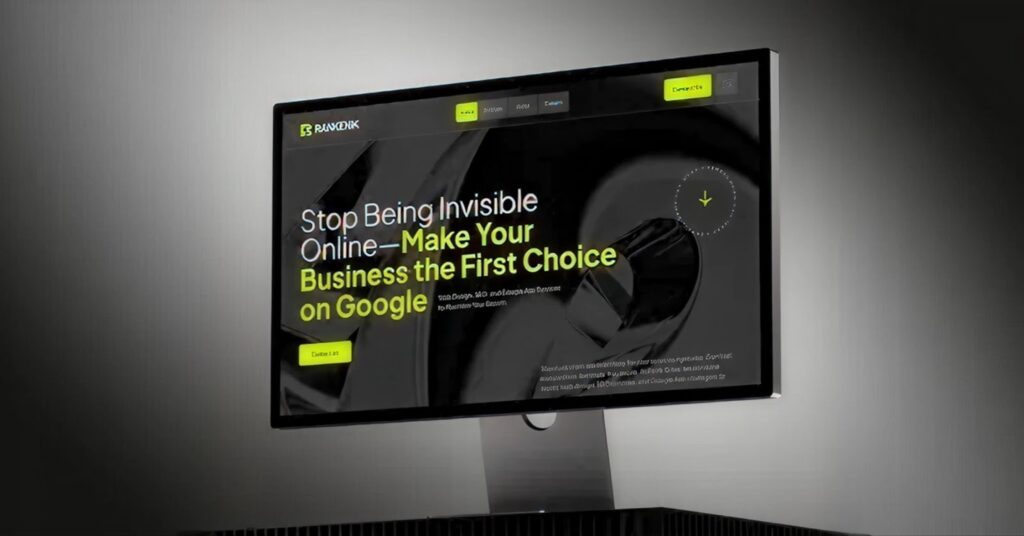
Checking their site lets you see a fit for quality and style.
This is the easiest test of all. Look at their own website. Is it good? Is it fast? Is the copy clear? Is the navigation easy?
An agency’s website is its best sales tool. If they cannot design a good site for themselves, they cannot design one for you. Look for attention to detail. Are there broken links? Do the images load slowly? These are signs of laziness.
Look at the tone of their writing. Is it full of buzzwords? Or is it clear and human? This tells you how they communicate. You want clarity. You want a team that speaks to humans, not bots.
Also, look at how they market themselves. Do they share knowledge? Do they have a blog? Agencies that share tips and guides are usually confident experts. They are not afraid to show what they know.
If their site feels old, clunky, or confusing, cross them off your list. Good design starts at home.
Summary: The right pick keys to gain
Picking a UI/UX agency is a big task. It takes time. It takes work. But the payoff is huge. A great user interface makes your product easy to use. A great user experience makes your product a joy to use.
When you follow these ten steps, you reduce your risk. You move past the sales pitch and see the real skills. You find a team that fits your style, your budget, and your goals.
Do not rush. Ask the hard questions. Check the references. Trust your gut. The right partner will not just build a product for you. They will build a future for your business.stions. Check the references. Trust your gut. The right partner will not just build a product for you. They will build a future for your business.